Water is the first thing to plan for and the easiest to get right. You can go weeks without food but only days without water, and after a storm or a main break, stores sell out of bottled water within hours. A simple plan, made once, takes care of it.
The basic rule: a gallon per person per day
Federal preparedness guidance (Ready.gov) recommends at least one gallon of water per person per day, for drinking and basic sanitation, with at least a several-day supply on hand. Two weeks is a stronger goal if you have the space.
For a family of four, three days is 12 gallons, and two weeks is 56 gallons. Plan for more for children, nursing mothers, people who are sick, hot weather, and pets.
Our picks
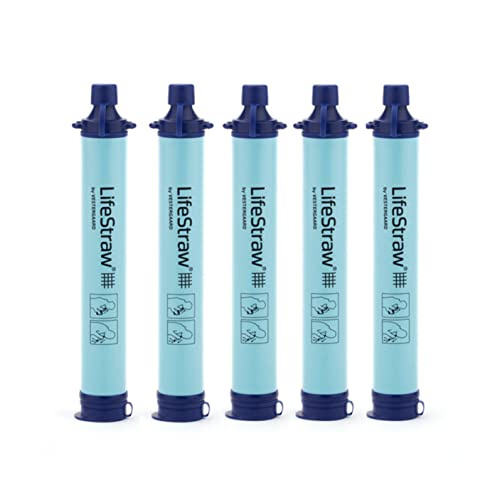
After comparing 6 water filters, we recommend the LifeStraw Personal Water Filter (5-Pack). If you want to spend less, the Sawyer MINI Water Filtration System (SP128) is a strong value.
Our favorite overall
LifeStraw Personal Water Filter (5-Pack)
The best water filter to stock for the whole family — five no-maintenance straws that each make about 1,000 gallons safe to drink.
Save 6%
Great value for less
Sawyer MINI Water Filtration System (SP128)
The most versatile small filter — a 2-ounce, 0.1-micron filter rated for up to 100,000 gallons that works as a straw, a squeeze filter or an inline filter.
$28.99 from AmazonPrice as of Nov 28, 2026 18:30 UTC · DetailsRead our full review →How to store it
Commercially bottled water is the simplest option; keep it in its original sealed container and watch the date. For larger supplies, use food-grade water containers made for storage. Don't reuse milk jugs, which break down and are hard to clean.
Store water in a cool, dark place, away from gasoline, pesticides and other chemicals. Rotate home-filled containers on a schedule. Ready.gov suggests replacing stored tap water every six months.
Water you already have
Your house holds more emergency water than you think. A typical water heater tank holds dozens of gallons; turn off its power or gas before draining it. The toilet tank (not the bowl) holds a few gallons for washing, as long as you don't use chemical cleaners in it. If you have warning before a storm, fill bathtubs and large pots for washing and flushing.
When stored water runs out
This is where filters come in. A gravity filter can turn rain barrels, ponds or creeks into drinking water for a household, and personal filters cover go-bags and cars. Remember that ordinary filters don't remove viruses or chemicals. Boil or chemically treat water when you're unsure of the source, and skip water that may contain fuel or chemicals.
Your one-afternoon checklist
Count the people and pets in your house and multiply by the days you want to cover. Buy or fill that much water and store it in one place. Put a personal filter in each go-bag and car, add a gravity filter for the home, and set a calendar reminder to rotate your water every six months.

See every pick we recommend, with live Amazon prices.
See all 6 Emergency Water Filters picks →Frequently Asked Questions
How much water should I store for an emergency?
At least one gallon per person per day, for several days at minimum. Two weeks is a stronger goal if you have room. Add more for hot climates, children, illness and pets.
How long does stored water last?
Commercially bottled water can be kept until its date. Water you bottle yourself from the tap should be replaced about every six months.
Is water heater water safe to drink in an emergency?
Water heater water can be used in an emergency. Turn off the power or gas first, let it cool, and drain it from the valve at the bottom. Discard any sediment, and filter or treat it if you're unsure.